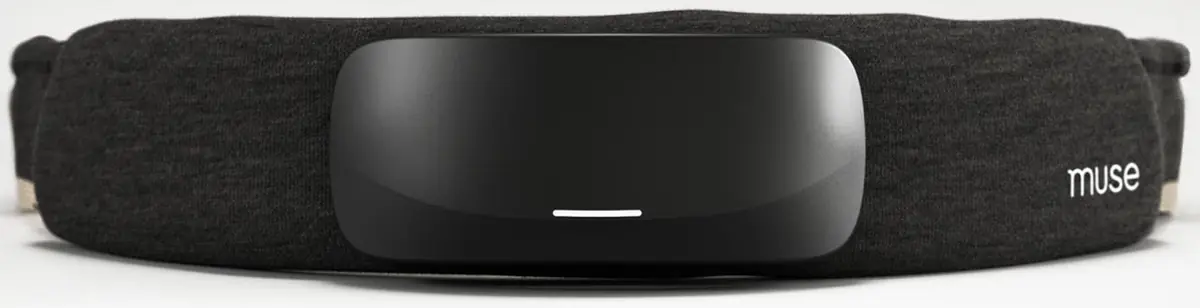
Sleep science
Deep sleep is defined in microvolts, measured at the forehead. Your ring is on your finger.
Sleep stages are scored from brainwaves. Rings and watches read pulse, motion and temperature, then predict the label a scorer would have written.
You wake up, you reach for the phone, and the number is already waiting. Eighty-two. One hour and twelve minutes of deep sleep. You feel like you were run over, but the ring says the night was fine, so you file the feeling away and start the day.
Here is the part that is not on the box. That number was not measured. It was predicted.
Sleep stages are brain states. They are named, defined and scored from brainwaves. A device that never touches your head cannot read them. It can only estimate them from what your body does downstream.
This is not a scandal and it is not a scam. The estimate is often a good one, and the companies that make it publish how good. But an estimate has a property a measurement does not have: when it is wrong, nothing on your screen tells you.
What deep sleep actually means
There is an official answer, and it is unusually specific.
Sleep clinics score a night in thirty second blocks called epochs, following the manual published by the American Academy of Sleep Medicine. For the deepest stage, N3, the rule reads like an engineering spec: slow waves between 0.5 and 2 hertz, more than 75 microvolts from peak to peak, filling at least twenty percent of the epoch. Twenty percent of thirty seconds is six seconds.
Two things follow, and they matter more than they look.
First, deep sleep is not a feeling or a duration. It is a shape in a voltage trace, counted six seconds at a time. The hour and twelve minutes on your screen is a tally of epochs that met that shape.
Second, the manual says where to look. The rule for deep sleep is written for the frontal derivations, the electrodes on the forehead. Deep sleep is scored, by definition, from the front of your head.
What each device is physically touching
Your ring is a good instrument. It is simply not pointed at your brain.
Oura publishes what is inside it, and the peer reviewed paper written by its own researchers is explicit: the signals are collected via infrared photoplethysmography, a negative temperature coefficient sensor, and a 3-D accelerometer. In plain language, light shone through your finger to watch the blood volume rise and fall with each beat, a thermometer against your skin, and a motion sensor. From the pulse the algorithm derives heart rate and heart rate variability. From those, plus movement, temperature and where you are in the night, a machine learning model predicts which stage a human scorer would have written down.
Every one of those measurements is real. The last step is not a measurement. It is a prediction.
At the finger
blood volume pulse, read with light
At the forehead
cortical voltage, read with an electrode
eight seconds of the same night
Put the two routes side by side and the argument stops being a matter of opinion. Both end in the same word printed on your screen. Only one of them starts at the organ that word describes.
Ring or watch
EEG headband
Same words on the screen. One route passes through a prediction.
That length has a cost you can feel. Your heart rate answers to more than your sleep: the temperature of the room, a late glass of wine, a cold coming on, the fact that your resting rate has drifted since the model met people like you. Every one of those lands in the input of a stage prediction. None of them lands in the definition of a stage.
Both approaches sit the same exam
Fairness needs a common yardstick, and there is one. It is called polysomnography: the overnight lab study where a technologist attaches electrodes to your scalp, face and chin, and a trained human scores the night epoch by epoch. It is the reference every sleep wearable is graded against, and both of the devices on this page have been through it. Both results are published. Here they are, unedited.
Oura Ring, published 2021
79%agreement with the lab across four stages
- Deep sleep, sensitivity74.4%
- Deep sleep, specificity94.6%
- REM, sensitivity78.1%
- Nights against the lab440
Altini M, Kinnunen H. The Promise of Sleep: A Multi-Sensor Approach for Accurate Sleep Stage Detection Using the Oura Ring. Sensors, 2021. 106 people, 440 nights, 3,444 hours. Work carried out with Oura.
Muse S headband, published 2026
0.76Cohen’s kappa across the whole night, substantial agreement
- Deep sleep, sensitivity88.3%
- Deep sleep, specificity94.3%
- REM, kappa0.85
- Nights against the lab47
Lanthier M et al. Assessing the performance of a portable electroencephalographic sleep monitor against level 1 polysomnography. Sleep Advances, 2026, volume 7. 47 people, recorded simultaneously with level 1 polysomnography scored by a blinded technologist. InteraXon supplied headbands and did not fund the study.
Read this before you use those numbers on anyone
They come from two separate studies, run by different teams, on different people, five years apart. Nobody has put both devices on the same heads on the same nights, so this is not a head to head, and it should not be quoted as one. Oura has also published a newer staging algorithm since 2021 and reports better agreement with it.
What the two papers do establish is the thing this page is about. Reading the brain directly lands closer to what a human scorer sees, and the distance is widest on deep sleep, which happens to be the number you look at first in the morning.
And in the other direction: even with an electrode, the lightest stage is genuinely hard. In the Muse study, agreement on N1 was only fair, at a kappa of 0.41, while REM reached 0.85. No wearable stages a night perfectly. The question is how much of your night is measured and how much of it is guessed.
Where the difference shows up in an ordinary week
Case one
The morning your body and your app disagree
You wake up hollowed out and the score says you had a good night. With a prediction, there is no appeal. The model output is the whole of the evidence, and it cannot show you its work because its work was a guess about someone like you. With a direct read, the trace existed, the stages were read off it, and the shape of the night is there to look at.
Case two
The change you are trying to test on yourself
Dinner two hours earlier. No wine on a Tuesday. The thermostat at 65 instead of 70. You want to know whether deep sleep responded. Here is the trap: if the deep sleep number is computed partly from heart rate, and the thing you changed also moves heart rate, then the reading and the intervention are tangled together and no amount of nights will separate them. A measurement taken at the brain is not in that loop.
Case three
Doing something about it while it is still happening
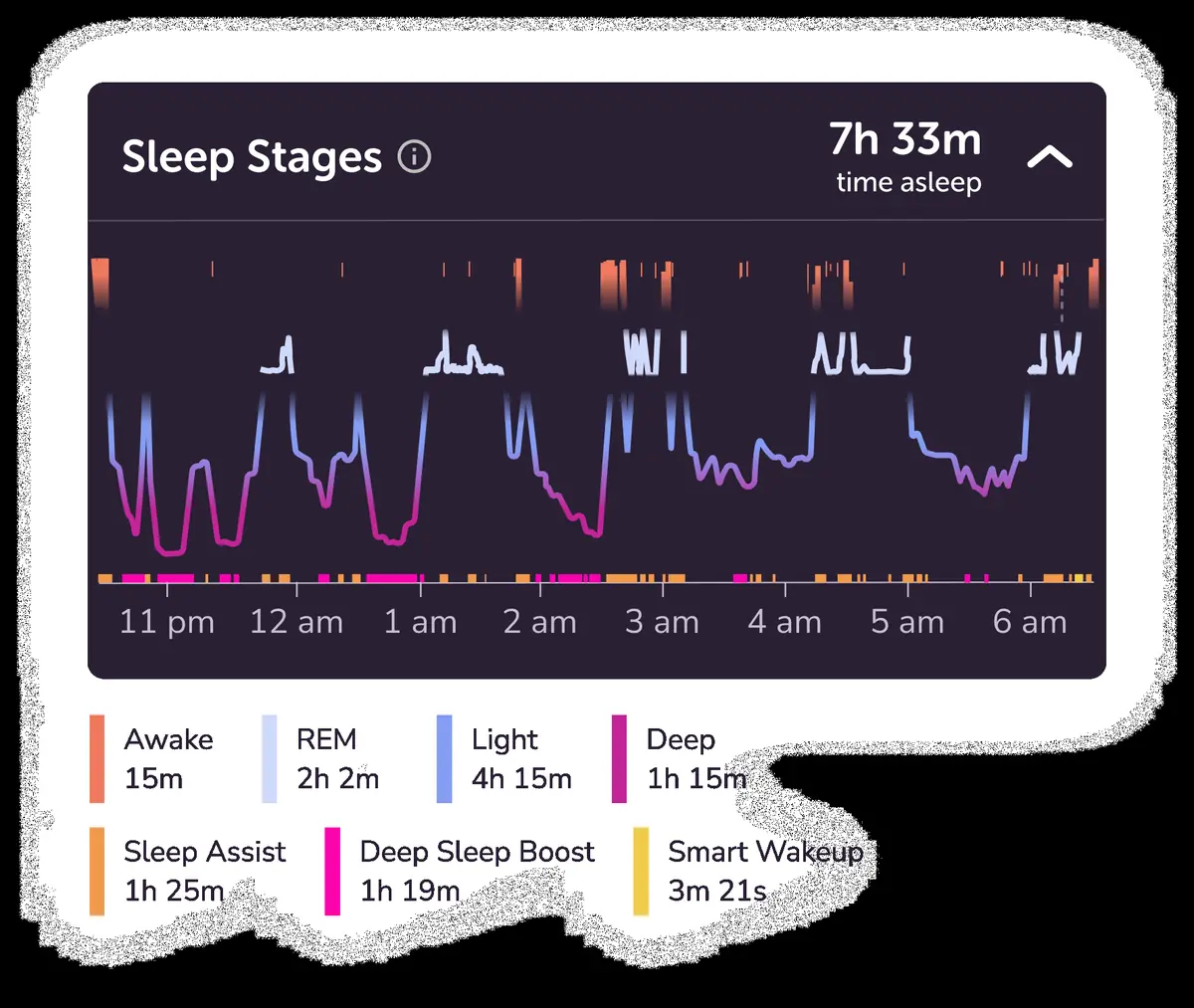
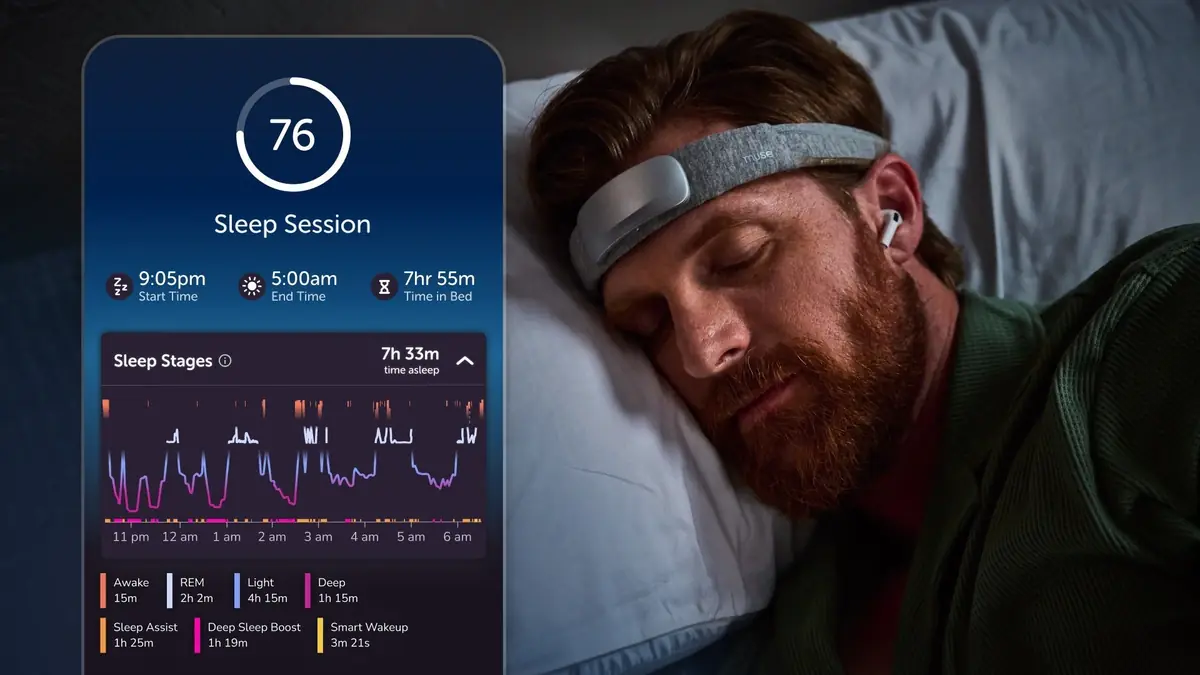
A morning report is a verdict. A live read is a lever. Because the band knows which stage you are in as it happens, software can act during the night instead of describing it at breakfast. That is a category of thing a next-day estimate cannot do at all.
What is actually in the band
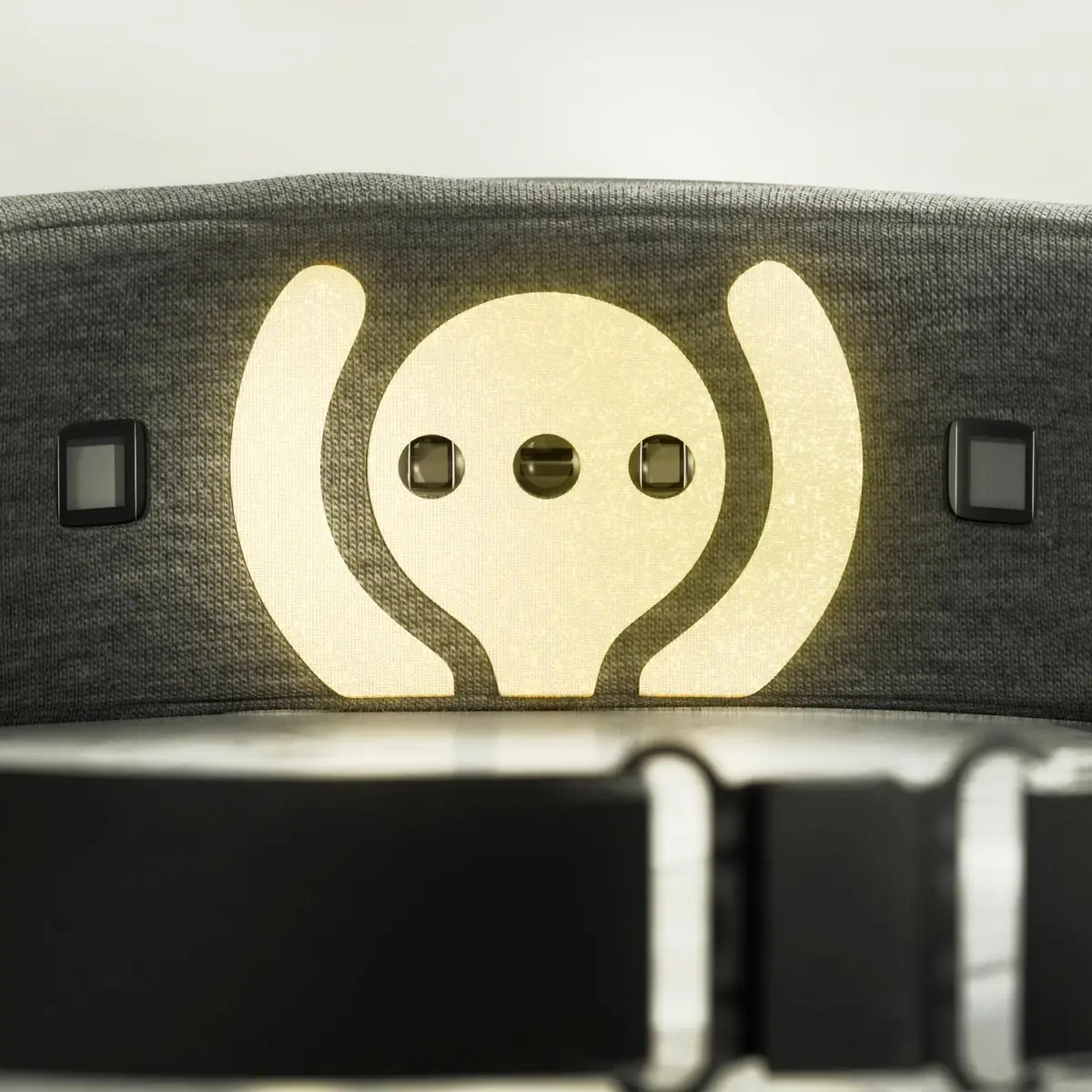
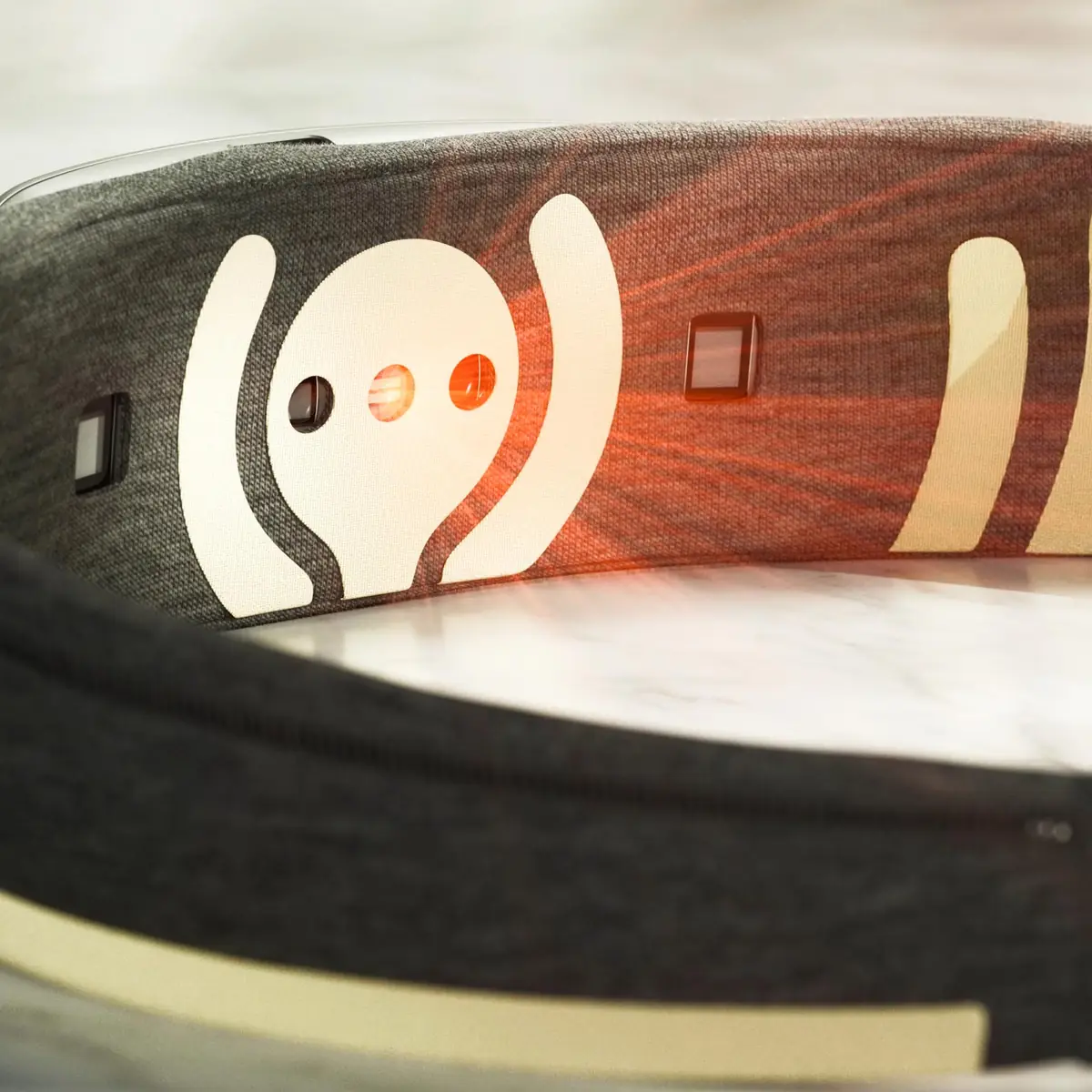
Seven sensors, and it is worth reading the list slowly, because the interesting part is not only what is there.
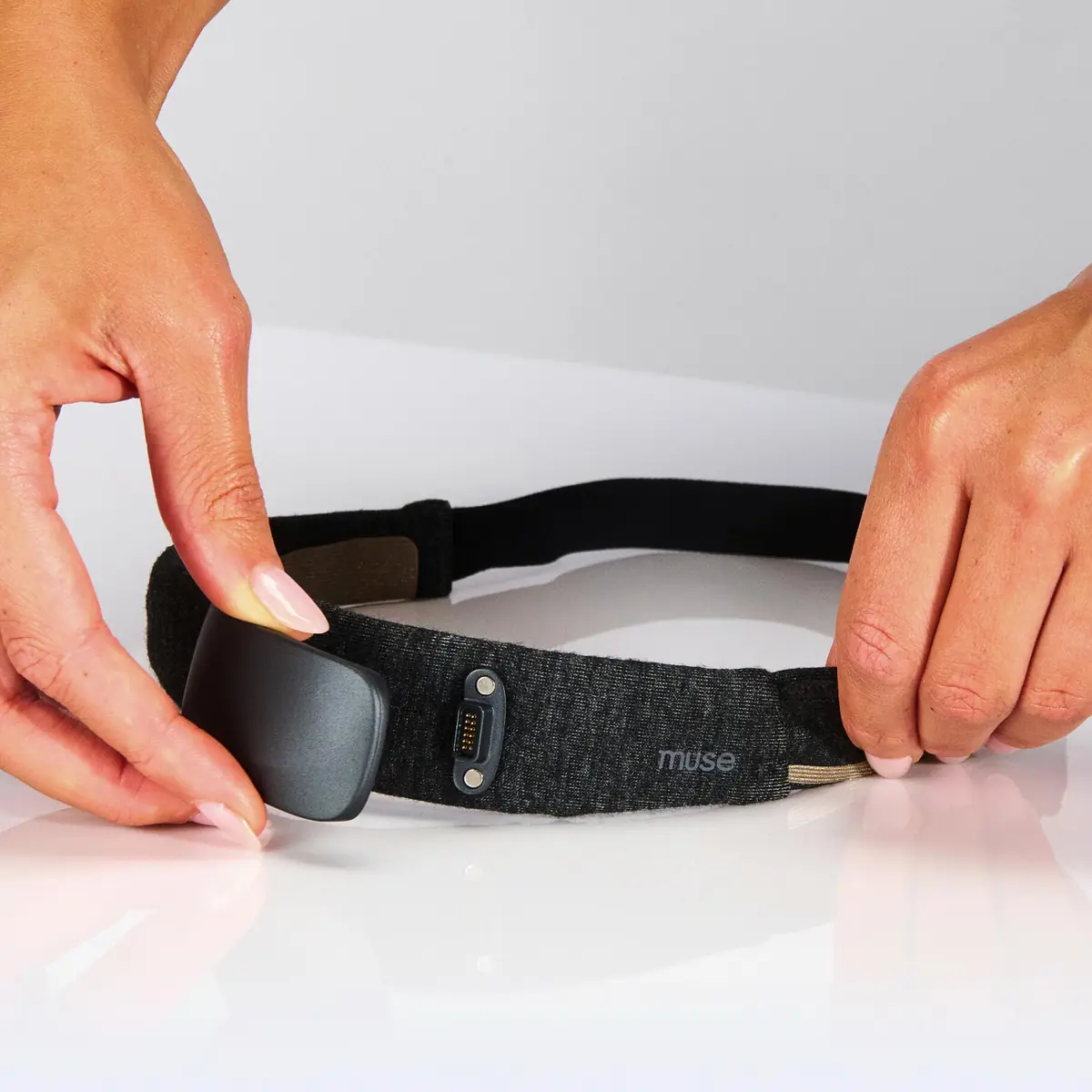
- EEGFour channels: Fp1 and Fp2 on the forehead, T9 and T10 behind the ears, with a reference at Fpz. Dry sensors, no gel.
- fNIRSNear infrared light that follows blood oxygenation in the frontal cortex. Muse describes Athena as the first device to combine EEG and fNIRS.
- PPGA pulse sensor, for heart rate.
- MotionAccelerometer and gyroscope, for breathing rhythm and body movement.
- BatteryUp to 10 hours, which is what an all night recording costs.
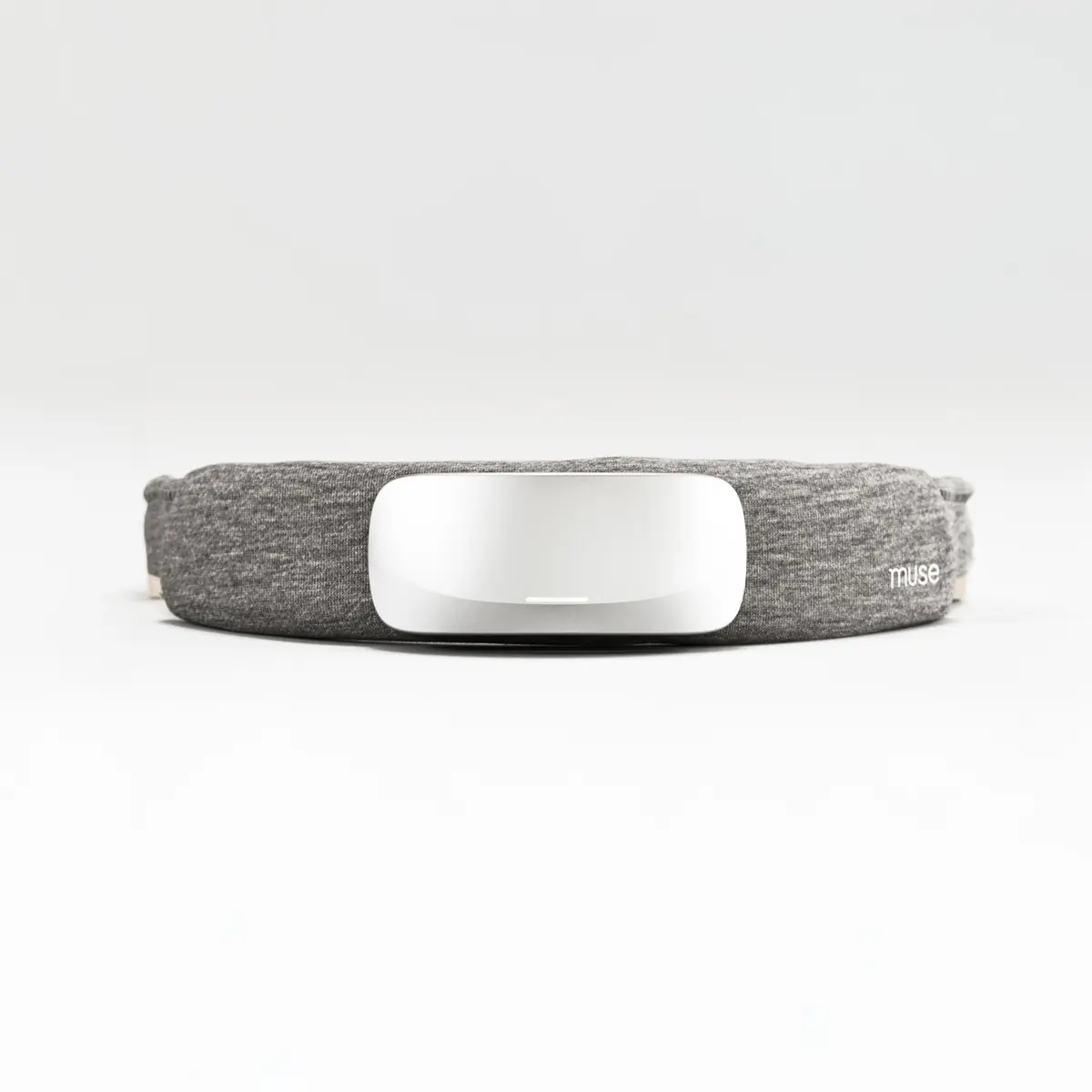
- BandSoft knit fabric with no rigid puck on the forehead, made to be slept in, in Carbon or Opal.
Notice the third line. The band carries a pulse sensor too. That is the point, and it is worth being straight about it: wrist and finger signals are not worthless, and Muse reads them as well. The argument was never that heart rate is useless. It is that heart rate should not be the only thing in the room when a sleep stage gets its name.
What a live read makes possible
Staging the night for the morning is one thing. Knowing the stage as it happens is another, and it is what the sleep features are built on. Three of them, each an optional toggle.
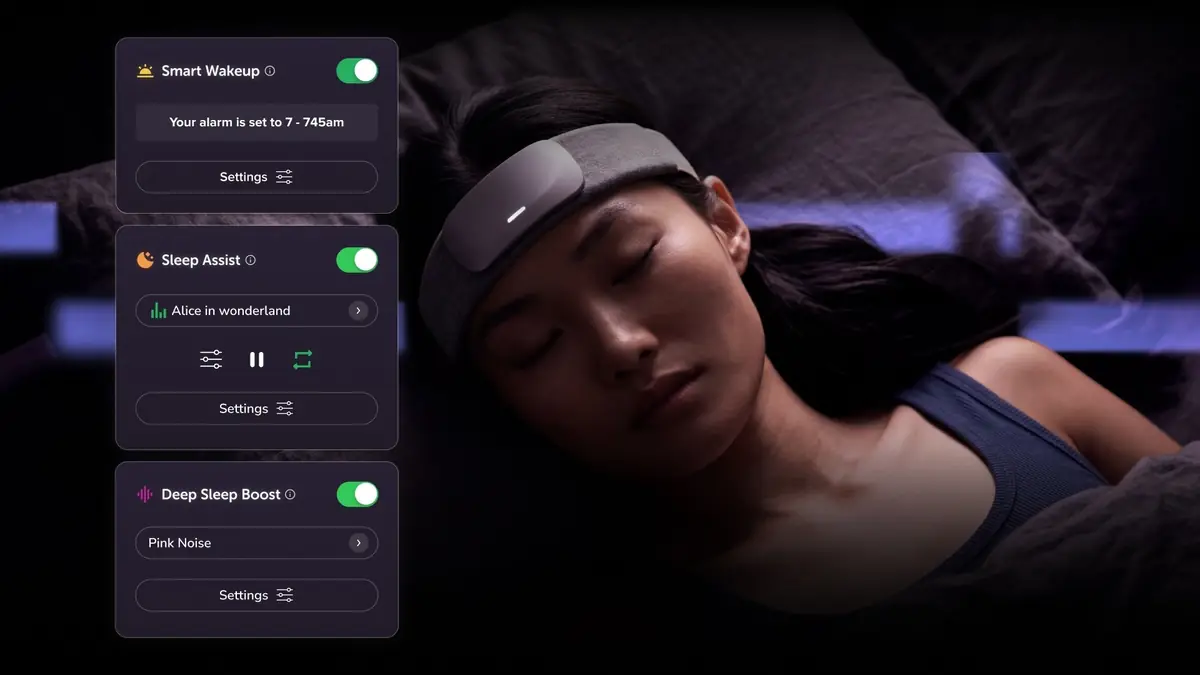
Sleep Assist
Audio that stops when you stop needing it
Stories and soundscapes play while you drift off, then switch themselves off once the band reads that you are asleep rather than at a fixed timer. Digital Sleeping Pills, the responsive version, fade with your attention. In Muse’s internal data, users fell asleep up to 55 percent faster.
Deep Sleep Boost
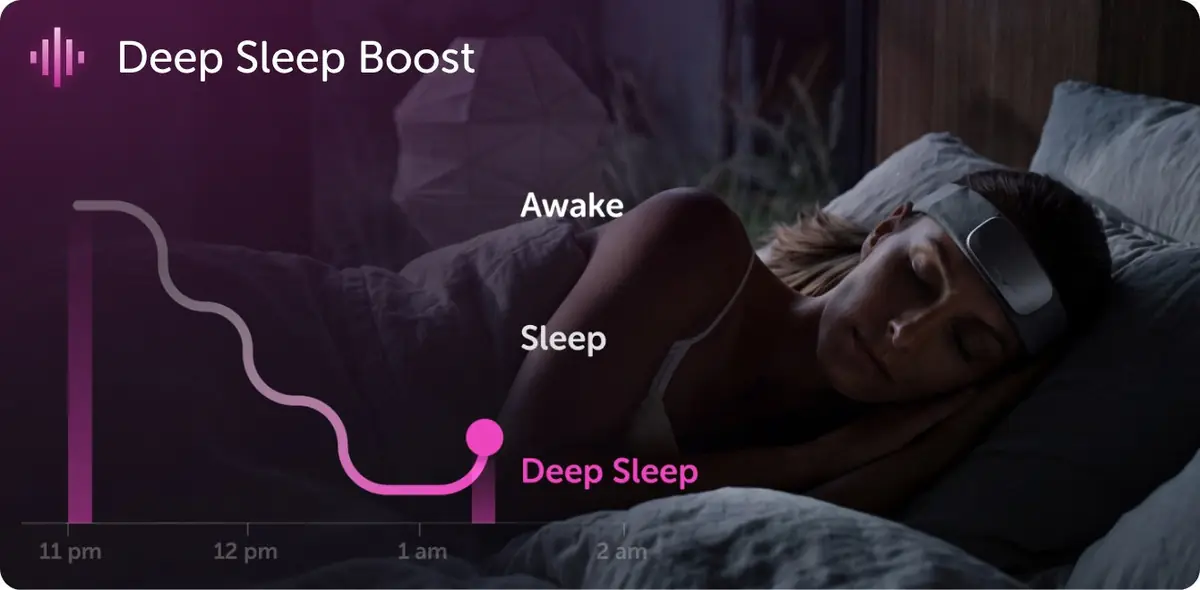
Sound cues timed to your own slow waves
The band waits until it reads deep sleep, then plays quiet cues timed to the slow waves themselves. Muse reports 42 percent more slow wave activity per minute in its internal data.
Smart Wakeup
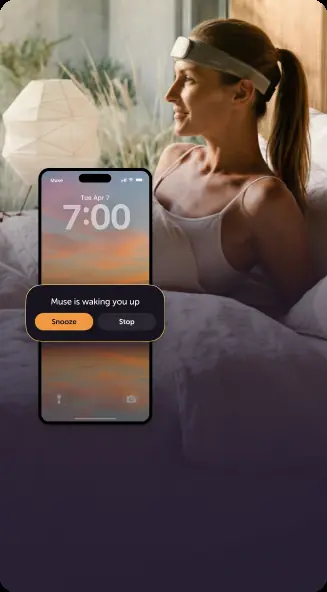
An alarm that reads the room before it rings
You give it a window instead of a minute, and it picks the moment inside that window when you are already out of deep sleep. Users reported a 20 percent improvement in sleep quality in Muse’s internal data. Part of Muse Premium.
Which numbers are which
The staging accuracy on this page comes from peer reviewed research against laboratory polysomnography. The three improvement figures in this section, 55 percent, 42 percent and 20 percent, are Muse’s own internal data, and individual results vary. They are labeled that way here so you do not have to work it out for yourself.
But can you actually sleep in it
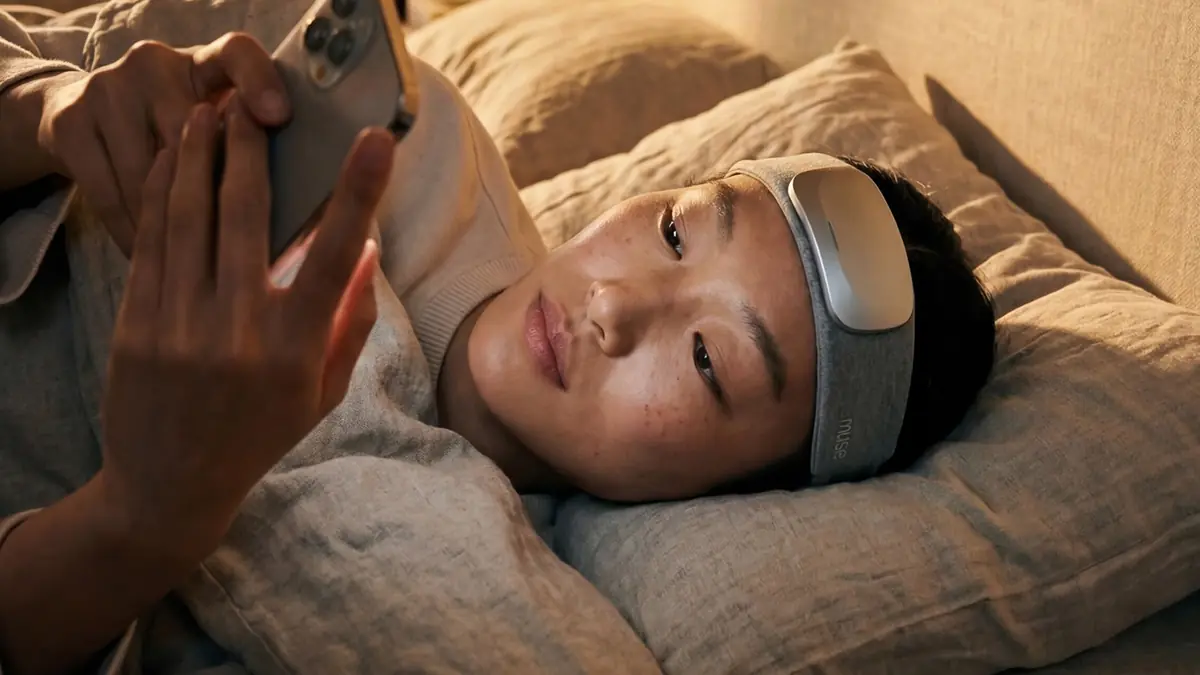
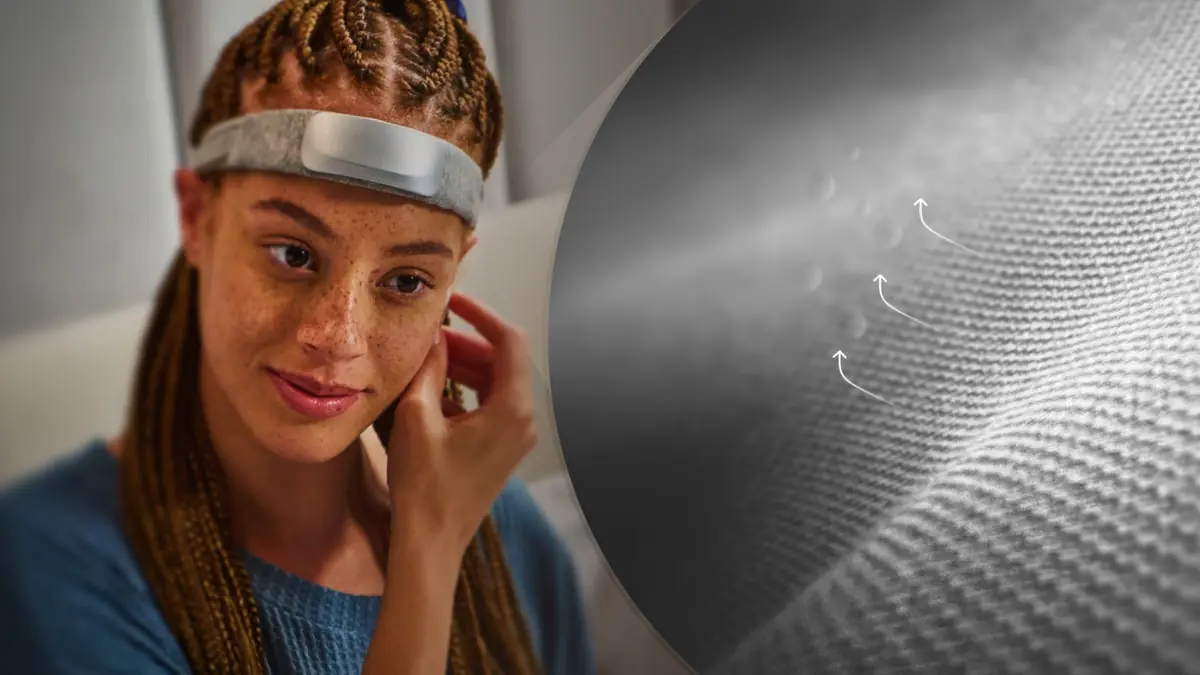
It is the first question every side sleeper asks and it deserves a straight answer rather than a paragraph of adjectives. It is soft knit fabric with no rigid housing over the forehead, it is built to be worn all night, and plenty of side sleepers wear it without trouble. It will not suit everyone, and that is what the thirty day window is for.
What owners say
“The Muse Athena gives me feedback that only very expensive EEGs can give. For normal folk this is about as good as it gets.”
-Jun- william, published on Trustpilot, August 17, 2026. A Muse owner of seven years.
“My Muse S Athena headband is brilliant for lulling me to sleep using the Digital Sleeping Pill function in the Muse app. The app provides detailed feedback for each sleep session which is helpful and comprehensive.”
Selwyn Brown, published on Trustpilot, July 31, 2026.
“The product is well made and gives a very high quality signal. Good for meditation and biofeedback.”
Dave, published on Trustpilot, August 20, 2026.
Muse holds a 4.0 rating across 2,332 reviews on Trustpilot as of August 20, 2026, which includes the people it has not suited. The reviews above are quoted in full and belong to their authors.
“Since using the Muse I have been able to decrease my sleep latency and increase my REM sleep scores. The Muse S serves as a great device to use with my clients in the NBA and NFL as a travel protocol to decrease the amount of Jet Lag they incur and help with overall sleep optimization.”
Louisa Nicola, neuroscientist and neurophysiologist, Neuro Athletics. Published on choosemuse.com.
More than 200 peer reviewed studies have been run with Muse hardware, according to choosemuse.com, which is an unusual sentence to be able to write about a consumer device.
What this is not
Muse is a wellness product. It is not a medical device, it does not diagnose, treat or prevent anything, and nothing here is medical advice. If you snore heavily, if you stop breathing at night, if you fall asleep during the day, a consumer device of any kind is not the answer and a clinician is. The claim on this page is narrow on purpose: it is about where a measurement is taken, and what the published research says about how well it matches the laboratory.
Muse S Athena
$474.99 · reads your sleep at the forehead, not the wrist
- Overnight staging read from your own brainwaves, with a full report every morning
- Four EEG channels plus fNIRS, PPG and motion sensors, up to 10 hours of battery
- Sleep Assist, Deep Sleep Boost and Smart Wakeup, all driven by the live read
- Soft knit band with no rigid housing, made for all night wear, Carbon or Opal
- Trains focus and mental endurance by day, one band for both
30 day money back guarantee per choosemuse.com. Overnight staging and the sleep tools work with the band itself; Muse Premium adds Smart Wakeup, the Enso AI coach and the full session library. Prices and terms as published on choosemuse.com on August 20, 2026.
Sleep on it for a month. If you would rather go back to a number you cannot check, the window is there for that too.
Sources
- American Academy of Sleep Medicine, Manual for the Scoring of Sleep and Associated Events. Stage N3 is scored when slow wave activity of 0.5 to 2 Hz and peak to peak amplitude above 75 microvolts occupies at least 20 percent of a 30 second epoch, read at the frontal derivations. aasm.org
- Lanthier M, Foti MC, Fonseca K, Higginson C, Oksit D, Smith D, Lina JM, Tavakoli P, Fogel S, Ray L, Robillard R. Assessing the performance of a portable electroencephalographic sleep monitor against level 1 polysomnography. Sleep Advances, 2026, 7(1), published online December 2025. pmc.ncbi.nlm.nih.gov/articles/PMC12782022
- Altini M, Kinnunen H. The Promise of Sleep: A Multi-Sensor Approach for Accurate Sleep Stage Detection Using the Oura Ring. Sensors, 2021, 21(13):4302. pmc.ncbi.nlm.nih.gov/articles/PMC8271886
- Ghorbani S et al. Validity and reliability of the Oura Ring Generation 3 with Oura sleep staging algorithm 2.0 compared to multi-night ambulatory polysomnography. Sleep Medicine, 2024. The newer Oura algorithm referenced above. sciencedirect.com
- Muse sensor layout, seven sensors, EEG positions, polysomnography benchmarking and research program. choosemuse.com/pages/science
- Muse S Athena specifications, EEG and fNIRS description, price and colorways. choosemuse.com/products/muse-s-athena
- Sleep Assist, Deep Sleep Boost and Smart Wakeup figures, published by Muse as internal data. choosemuse.com/pages/athena-sleep
- Customer reviews and overall rating. trustpilot.com/review/choosemuse.com